Prologue
Sometimes, when the symphony of the city has been knocking at my door from early in the morning, I descend into the street, wrapped in my black overcoat, and set off along the bustling avenues of the Right Bank. These are the gloomy days of winter when Parisian melancholy torments the soul and provokes free spirits into a long-lasting drift with no purpose and no destination.
I have no appointments; I do not have any specific goal in mind. I wander aimlessly through the tentacular city. Yet, although determined to travel purely at random, I seem almost to be following some railway track, a pre-ordained route, with no deviations. So I end up covering the entire stretch of the boulevards, several times – from République to Madeleine, Madeleine to République. Through the fog, I look at the pale façades and shop windows that line the street. I contemplate the stuccoes and wrought-iron balconies. The austere elevations of the Boulevard Haussmann. Then, when feverish and numbed by the cold and the neon lights, I take refuge under the dome of the Galeries Lafayette.
Paris is narcotic for a man alone, a never-ending labyrinth where the anxiety of freedom is relieved. The city appears like a series of sets, in which every sequence is connected to another by a fine thread, and the whole comes together to create a coherent film. On the hallowed territory of the city, walking has become, for me, an ascetic ritual.
For this reason, when I am carried away by a sudden urge or struck by an apparition – a distant sign, the swish of a skirt or a falling leaf – I leave the main road and traipse the streets adjoining the boulevards. I wander through the faded alleys of the Sentier, through the fine art auctions, towards Drouot, but mainly in the triangle bounded by Rue Saint-Augustin, Rue de Richelieu and Avenue de l’Opéra – that Far Eastern oasis centered around Rue Sainte-Anne, my own “little Tokyo”.
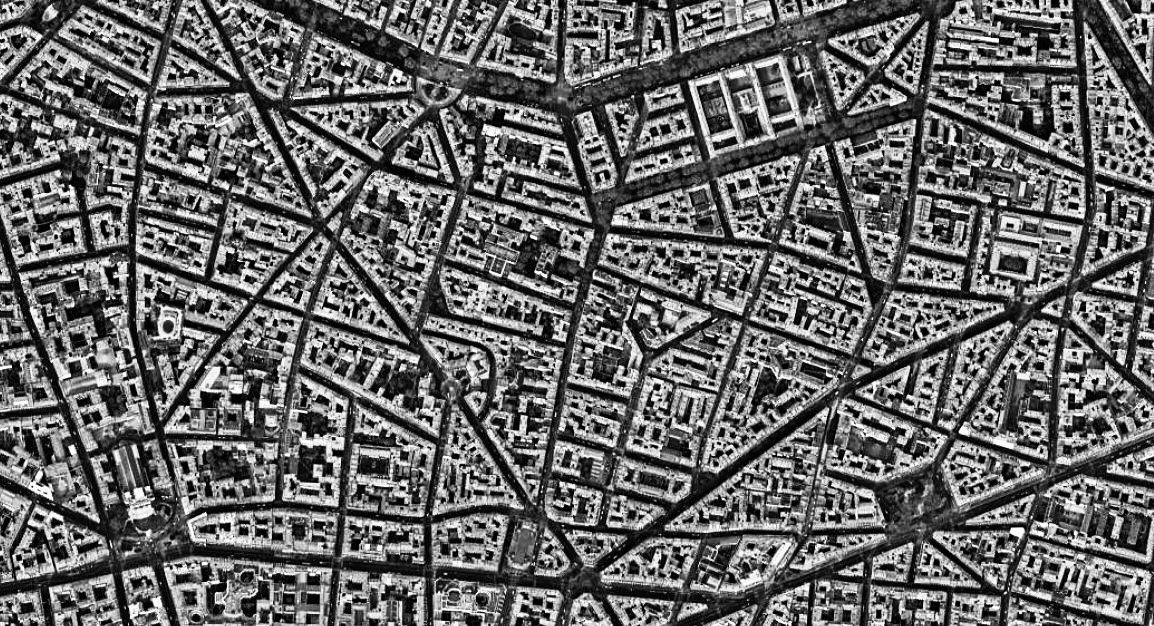
Paris, we know, is no longer the center of the world, but it is the perfect place to consecrate yourself to your own vices and, in my case, that typical Parisian habit which is to spend my days wandering about, with no end result. In the city, the intimacy of the “villages” alternate with great nineteenth-century boulevards, lined with bar and restaurant terraces, where people sit as if in the cinema, watching life go by.
Thanks to the abundance and variety of its monuments and its dense, uninterrupted urban fabric, but also due to its uniquely interpenetrating public and private spaces, Paris is made to be walked. In this respect, the French capital differs from metropolises of more recent origin, such as those in emerging countries, but also from other European cities with an artistic heritage: it was right here – rather than in Florence or Rome – that the art of wandering the city streets developed, finding expression in a rich cultural and literary tradition.
The figure of the solitary walking man, observing the landscape of the city and its crowds, made its appearance in French art and literature towards the middle of the nineteenth century. The term “flâneur” was used, in fact, to indicate a type of individual, usually an intellectual or artist, who strolled aimlessly around a Paris that was undergoing profound architectural and social transformation. Free and alone in the maze of the city, the flâneur craves a revelation that might change his life and destiny. He seeks to capture and eventually to preserve, through artistic or literary expression, a new form of beauty, in accordance with the aesthetic criteria that were in the process of being defined in modern European culture.
Thus, if the establishment of metropolitan environments has influenced the history of literature and the arts of the modern era, it is precisely through artistic and literary works that a particular image of the city has been “constructed”, assigning symbolic meaning to its physical forms and inventing different ways of using and interpreting its spaces. The interplay between literature and reality evokes the metaphor of the city as a text or semiotic structure. The city appears to the flâneur as something intelligible, a “plot”, a story that can be told.
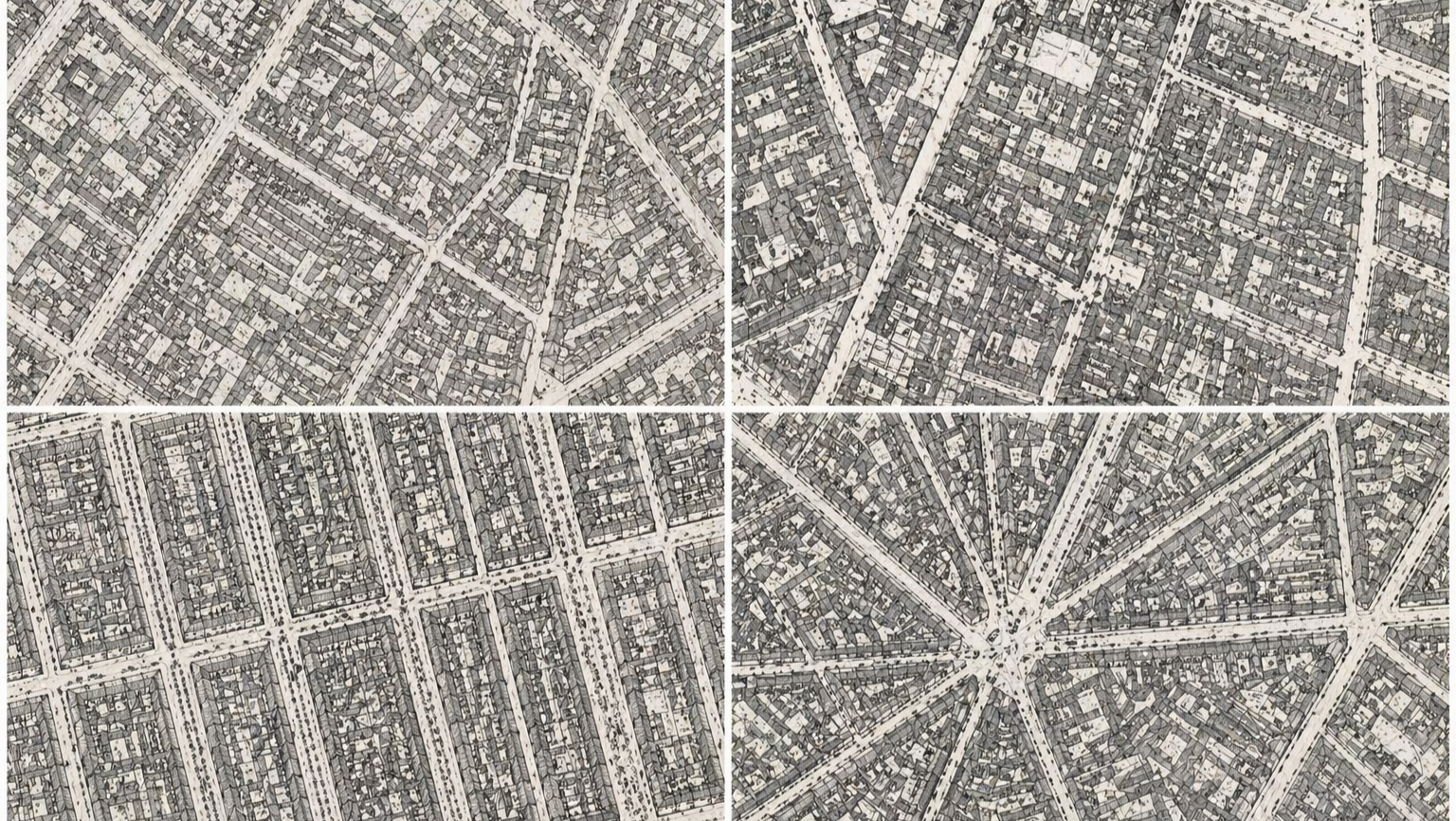
During the years I spent in Paris, I too was a flâneur. I sought to explore more or less systematically every arrondissement, every neighborhood of the French capital. I tried to learn the names of the roads by heart, to remember the precise sequence of the façades of the buildings along a boulevard. I sought to observe the changes in mood of a square in the various moments of the day, in the four seasons, under different skies. And I tied the facts of my life so tightly to the spaces of the city, to the point that every corner of Paris reminds me of a conversation with a friend, an episode, a love.
I know that many people use the streets of the city as a space to be crossed quickly in order to go from one place to another and get their business done. But my story, the one I am about to recount, is quite different. The first time I met Paris – and I’m not referring to the first time I visited the city as a tourist, but the first time I found myself alone and naked before it –, that day Paris was for me an exciting mystery. And then, gradually, I learned to get to know the city more profoundly, to move through it, to study its past, and our relationship became more intimate. Paris became part of me, but I am also part, in some way, of Paris.
Many years have gone by and although the circumstances of my life have taken me far away, I still occasionally close my eyes and imagine a walk through Paris. Now that there is also a mental distance between me and this city, I wonder what remains of all that time spent walking like a madman, of that confused but passionate quest for a truth that I thought was inscribed on the façades of the buildings, entrapped in the atmosphere of a neighborhood. What remains, in the end, of a love?
Of all the enterprises that one may attempt, of all the activities to which one can consecrate one’s energies and youth, flânerie is certainly among the most useless. The flâneur, by definition, is going nowhere. To become expert in the art of flânerie you have to study carefully the history of the city, train your eye, develop memory and orientation, reinforce your physical stamina. But your training as a flâneur can have no professional opening, it leads neither to a successful career nor to celebrity. Balzac said that flânerie is a science, the “gastronomy of the eye”; but it is a science that, for the moment, has no academy or official recognition.
I have long been seduced by the idea of losing myself, persuaded by the thought that there was something poetic in this dissipation. I thought that the destiny of every true flâneur was to immerse himself in the panorama surrounding him, to the point of becoming one with it and, ultimately, to vanish. To listen to the voice of the world, the self must be silenced.
And the flâneur is the incarnation of this ideal: dazzled by beauty, he decides to relinquish the self in order to consecrate his life to contemplation. Lost in the maze of the city, he progressively sheds all the teaching received and adheres to the visible reality like a chameleon. The man who wanders in the city projects himself on the façades of the buildings, on the shop windows sparkling in their sequence, on the faces of the people who pass by.
It is precisely this ability to annul oneself, to come out from the stifling prison of the inner life, this is the science and the skill of the flâneur. “Not finding the road that you are looking for,” – said Walter Benjamin, the writer who initiated the study of flânerie at the beginning of the twentieth century – “does not mean much. But to lose one’s way in the city, as one loses one’s way in a forest, requires some schooling.”

FLÂNEUR. THE ART OF WANDERING THE STREETS OF PARIS
A man walks the streets of Paris, alone and without a destination. He covers the long avenues with their great buildings; he gets lost in the crowds of the grands magasins. Buttoned up in his black overcoat, he wanders, restless, through the city. But what is he looking for?
The word flâneur derives from the French verb flâner, which means “to wander”, “to waste one’s time”.
This book teaches how to wander aimlessly, how to get lost in the city. You will find here some stories about promenades and urban exploration, stories about dandies and about flâneurs. Reading this book you will find out the secrets of flânerie, the noble art of wandering without a destination.

FLÂNEUR. L'ARTE DI VAGABONDARE PER PARIGI
Un uomo cammina per le strade di Parigi, solo e senza una destinazione. Percorre lunghi viali dai palazzi maestosi, si perde tra la folla dei Grands Magasins. Abbottonato nel cappotto nero, vaga per la città irrequieto. Ma che cosa cerca? Dove va?
La parola flâneur deriva dal verbo francese flâner che significa «gironzolare», «perdere il proprio tempo».
Questo libro insegna a perdersi nella città: contiene racconti di promenades e di avventure urbane, storie di dandy e di flâneur… Contiene informazioni su personaggi, autori e artisti che hanno vagato per le vie di Parigi. Leggendo queste pagine scoprirete i segreti della flânerie, la nobile arte di vagabondare senza una meta.

FLÂNEUR. L'ART DE VAGABONDER DANS PARIS
Un homme marche dans les rues de Paris, seul et sans but. Il parcourt les longues avenues aux immeubles majestueux, il se perd dans la foule des Grands Magasins. Enveloppé dans son manteau noir, il erre dans la ville sans répit. Mais que cherche-t-il ? Où va-t-il ?
Ce livre enseigne à se perdre dans la ville : il contient des récits de promenades et d’aventures urbaines, des histoires de dandys et de flâneurs… Il évoque les personnages, les auteurs et les artistes qui ont erré dans les rues de Paris. En lisant ces pages, vous découvrirez les secrets de la flânerie, l’art noble de vagabonder sans destination.

都市漫步者 - 漫步巴黎的艺术
一个人行走在巴黎的街巷,形单影只、漫无目的。他穿行于高楼林立的林荫大道间,迷失在百货公司的人群中。他裹紧黑色的大衣,脚步慌张地在城中游逛。他要寻找何物?他要去往何方?
“ flâneur” (都市漫步者)一词源于法语动词“flâner”,意为“悠哉闲逛”,“虚度光阴”。
这本书教会人们如何在城市中迷失:其中包括都市漫步的典故,浪漫的都市邂逅以及纨绔子弟和都市漫步者的趣事…… 包括曾在巴黎的大街小巷漫步过的社会名流、文人才子、艺术巨匠的事迹。你会在字里行间发现都市漫步——这门漫无目的行走的高雅艺术的秘密。
Double-click to edit...